20161210_wbp002_0-2

A new motorcycle brand springs from a computer

December 8, 2016

WHEN the covers of the Vanguard Roadster are removed at the New York Motorcycle Show on December 9, the moment will mark the launch not only of a new muscle bike, but also of a new brand with big ambitions. Vanguard is a bold startup that believes it can use the increasing digitization of manufacturing to ride with the pack of long-established bike companies, such as Honda, Yamaha, Harley-Davidson, BMW and others, who are ready to sell some 500,000 motorcycles. and scooters in America this year.

This may sound laughable. So far, Vanguard has built a grand total of one machine. At around $30,000, with a 1.9-liter V-twin engine, its price is top of the line (although well below the price of some superbikes, which can cost three times as much). But if Vanguard is successful, within a few years it will be selling several thousand motorcycles a year from a range of several different models.

What allows a startup to aim so high is how digital technologies reduce the cost of entry for manufacturing companies that were once considered the preserve of giants. This is especially the case in the long and expensive product development process. From sketches and clay models to component engineering and testing, it took an automaker five years or more to bring a new vehicle to market. It’s just as slow for bike manufacturers.

Some automakers can now do the job in just two, using three-dimensional computer-aided design, engineering and simulation systems. Indeed, the product – a car, motorcycle or even an airplane – exists in digital form where it can be sculpted and tested long before anything physical is built. It is also possible to simulate production methods.

This is the approach of Vanguard, created in 2013 by François-Xavier Terny, a former management consultant, and Edward Jacobs, a motorcycle designer. Despite the large producers’ lack of resources – at the moment the company has only a handful of employees – it used software (in this case Solidworks from Dassault Systèmes, a French company) to design a digital motorcycle before turning it into a real one. These systems benefit from falling prices and increasing performance in computing power. “We now have the same level of design and engineering tools as the big guys, which would have been impossible ten years ago,” Terny says.

Digital designs also give the company easier access to global suppliers who will offer the best prices for the parts they need. Design files can simply be emailed to a large network of engineering firms that offer their services online.

After road testing and further development is complete, production of the Roadster is expected to begin sometime in 2018 at a renovated industrial unit at Brooklyn Navy Yard in New York City, which is now home to a number of manufacturing companies. This is another feature of how factories are changing rapidly: with digital engineering, cheaper automation and new production techniques such as 3D printing, it may be possible to speed up manufacturing in town centers.

This article appeared in the Business section of the print edition under the headline “Digital rider”

mgx21_34dx_acc-1024x837

The secret history of Italy’s most famous motorcycle brand

Get to know Moto Guzzi, who have been building some of the world’s most badass motorcycles for nearly a century.

mgx21_34dx_acc-scaled-1 MGX-21 (all photos courtesy of Moro Guzzi)

Few things become as haunting for motorcyclists as seeing a mint Moto Guzzi on the street. Although Guzzi’s have not always resonated with the market, Italy’s oldest motorcycles have always been distinctive, full of character and utterly unique. For superfans like Ewan MacGregor, who calls himself a “Guzzisti”, it’s a wonder that a brand with such a rich and dynamic narrative, studded with a lifetime of accolades, stays out of the public eye.

normale-500-scaled-1 normal

Moto Guzzi was born on March 15, 1921 in Mandello del Lario, a small town on the shores of Lake Como where the company still has its headquarters. Owner and founder Emanuele Vittorio Parodi and his son, Giorgio, along with family friend Carlo Guzzi, helped create the brand’s first mass-produced motorcycle, the Moto Guzzi Normale, which had a single-cylinder engine producing a huge 8 horsepower. 2,065 examples of the Normale came out – not bad for a first try – followed by a slow but steady stream of bikes that included the 1928 GT 500 Norge, one of the first production motorcycles with rear suspension. Moto Guzzi also enjoyed success on the racetrack, with its lightweight grand prix motorcycles winning several world championships.

gt-norge-500-scaled-1 GT 500 Norway

World War II strangled motorcycle development, but at the end of the war Moto Guzzi made its way into the limelight by launching the Guzzino 65, also known as the Cardellino, which became the most popular bike. best-selling brand. But motorcycles were losing ground to scooters, like the venerable Vepsa, so Moto Guzzi tried to score with the scooter-looking Galletto in the early ’50s. It didn’t quite take off. With the decline in popularity of motorcycles in the 1950s, Moto Guzzi found itself in dire financial straits. The company withdrew from motorsport in 1957 and by 1964 Moto Guzzi was in serious money trouble.

guzzino-65-scaled-1 Guzzino

In 1967, Società Esercizio Industrie Moto Meccaniche (SEIMM) took over the reins of Moto Guzzi, knowing that it would be difficult to make the company profitable again. At the same time, Moto Guzzi engineers were installing a V-8 engine, designed by employee Giulio Cesare Carcano for Moto Guzzi’s former racing program, in a production bike, the ’67 V7 700. The transverse V the air-cooled 90-degree-twin engine almost immediately became a hallmark and design hallmark of Moto Guzzi. In 1973, a company called De Tomaso bought SEIMM and, in turn, Moto Guzzi. Moto Guzzi started making money again and brought the iconic 850 Le Mans café racer to life, produced from 1975 to 1988.

Moto Guzzi evolved and grew, developing a stronger design language, implementing new mechanical systems and perfecting its distinctive longitudinal V-twin engines. But Moto Guzzi remained fully fledged under De Tomaso, and that didn’t change when Aprilia, another Italian motorcycle manufacturer, bought Moto Guzzi in 2000. It wasn’t until Piaggio Group bought Moto Guzzi in 2004. , 83 years after the release of Normal, let the brand have a chance to become a household name.
v7-sport-scaled-1 V7 Sports

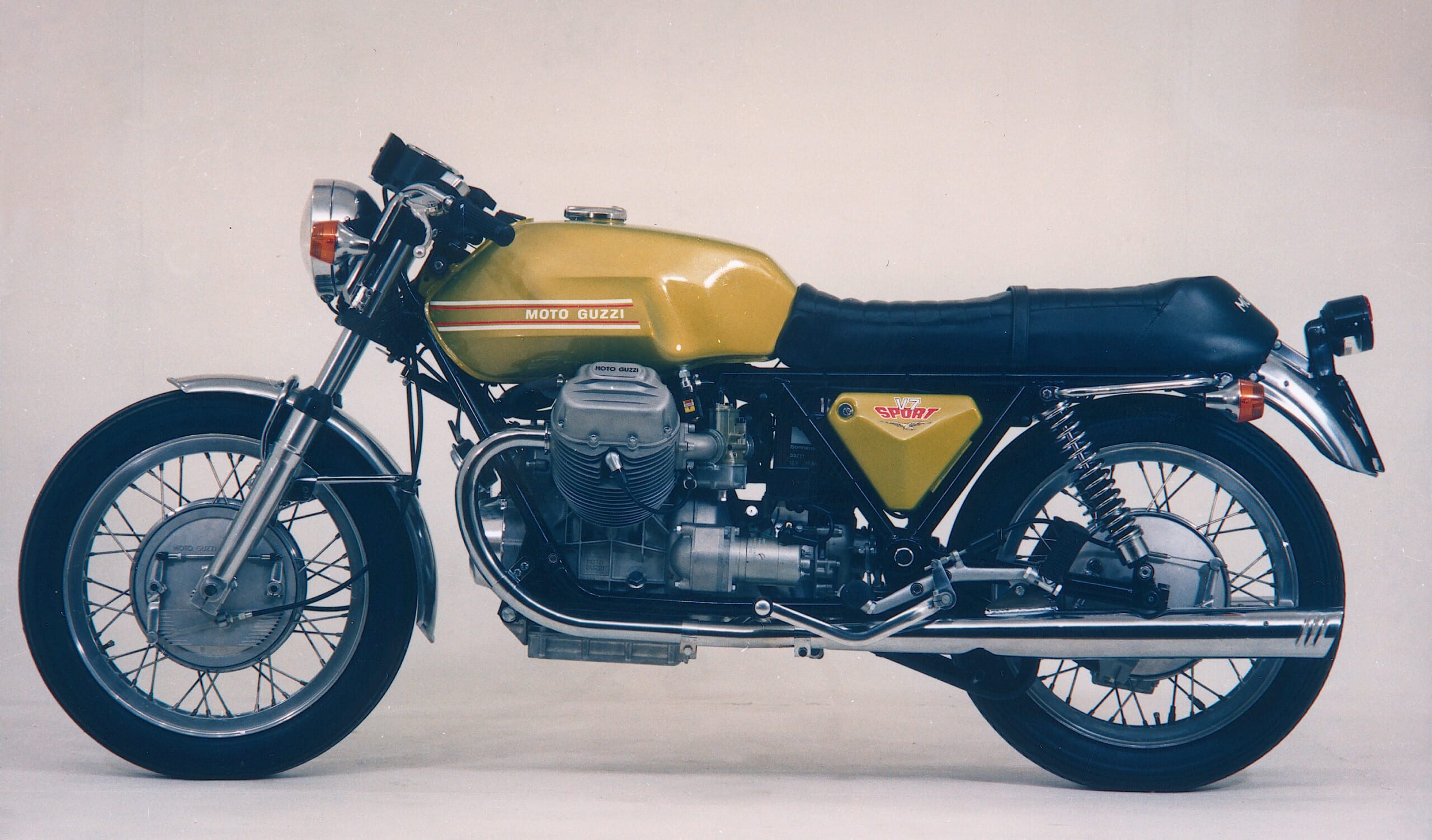
New Moto Guzzi models began rolling out, each engaging and quirky in a way that appealed to some and repelled others. Riders were thrilled when the V7 returned in 2008, still powered by a 90-degree transverse V-twin engine, though it didn’t quite capture the appeal of its predecessor.

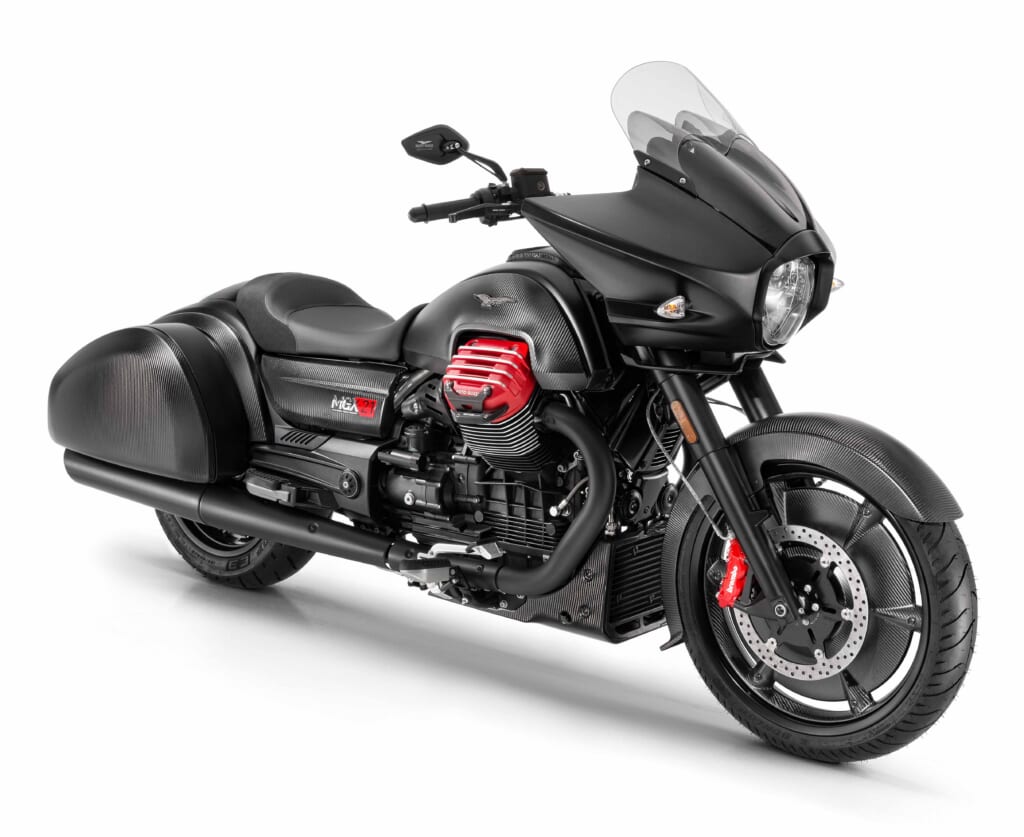
Yet it remains the best-selling model in Moto Guzzi’s nine-bike lineup. We are now seeing the fruits of a promise made by Piaggio in 2009 to invest more in Moto Guzzi, revamp its outdated Mandello del Lario factory and develop a more diverse product portfolio, which includes the recently released MGX-21, a big, black bagger who hopes to steal Harley-Davidson’s sales. But Moto Guzzi still hasn’t caught the attention of a new generation of bikers. Why ?

mgx21_34dx_acc-scaled-1 MGX-21

“With Moto Guzzi, we are now faced with what we call the ‘heritage brand dilemma,’” says Davide Zanolini, executive vice president of marketing and communications for the Piaggio Group. “Preserving decades of history and tradition, or changing to stay relevant in a rapidly changing market? Because relevance comes with change, heritage should not tell you where you are, but where to go next.

He continues: “Our biggest challenge is to make Moto Guzzi accessible and desired among younger generations of riders. The secret is a perfect combination of innovation and emotion, technology and soul, material and feeling. The means to that end are murky, but what is important here is that Piaggio clearly understands the predicament Moto Guzzi finds itself in and will work to bring the brand the attention it deserves, by feeding on a new school of Guzzisti.

“Over the next decade we want to see more young people riding Moto Guzzi,” says Zanolini. “More women and more enthusiastic riders are riding innovative and environmentally sustainable motorcycles that carry the authentic Moto Guzzi DNA.” Does that mean we’ll soon see an all-electric Moto Guzzi whizzing through the streets? “The Piaggio Group is extremely attentive to alternative motorizations, but at present, electric vehicle technologies are not yet at a stage of maturity that foresees a short-term application for the Moto Guzzi brand,” says Zanolini.

“The real solutions of the future are linked to the personalization of a motorcycle”, he says. “All Moto Guzzi are designed to be personalized according to the tastes and personality of the owner – a greater number of accessories, a flexible platform ready to be transformed on demand, the possibility of creating your own unique accessories.” Zanolini says Moto Guzzi will “look to the future without forgetting history and its past”, which is good since the future seems to be as fascinating as the brand’s tumultuous but intriguing past. Moto Guzzi could very well shake up the motorcycle world when it enters its second century of life, but it won’t be if the name Moto Guzzi means nothing to you. But I hope now it is.

Tags: Italy luxury motorcycles Moto Guzzi Rides

2016-vintage-motorcycle-price-guide-2015-2016-3-2

Complete price guide for vintage motorcycles 2015-2016 edition

Test your vintage motorcycle buying Mojo!

Pop quiz to test your vintage motorcycle buying mojo:

2016-vintage-motorcycle-price-guide-2015-2016-4-370x571

1. What’s worth more: a 1985 Honda V40 Magna (VF700C) with very low mileage in near immaculate condition or a 1950 Whizzer Roadmaster in good working order but with a few dents, rust and scratches. non Whizzer bits used for yard repairs?

2. You drive down a side road and see vintage bikes set up in a farmyard with “for sale” signs. The sign says, “$ 2,000 each, farm, your choice.” “

You have about $ 2,000 in reserve that you saved for a really good vintage bike to restore – not a full frame mega project, but something doable with only a few moderate repairs. Your choices in the yard are:

  • a 1967 Honda CB450 in rough but serviceable condition with some surface rust and a slightly dented tank;
  • a 1973 Kawasaki Z1 with missing parts (muffler, mirrors and front fender), dirty and dented tank, surface rust, missing speedometer, no longer works now but “worked last summer”;
  • 1964 BSA Thunderbolt Rocket (A65T) in fair but complete condition. Dirty, a little rusty and it makes a subtle “pfft” sound when the kicker is pushed through. Starts and runs – the question is, for how long?

Which of these offers is the best?

3. You are driving and see a 1976 Honda CJ360T with a “for sale” sign on the side of the road. From all that you can see, everything is original and in showroom condition. No evidence of ever being dropped or run over, not a scratch.

Only 2,600 miles are on the clock and it starts from the first kick. The owner is asking for $ 1,400, including the original tool kit, owner’s manual and shop maintenance manual. Is the owner crazy or is the price of the bike right?

4. You are at the bike show and really have the bug to get a classic Euro-bike and you are willing to spend the money to do it. A 1959 Moto-Guzzi Falcone in sparkling, like-new condition stops you short and it’s for sale. You decide to take a serious step towards it; what should you offer to avoid sounding like a complete amateur, without preparing to get skinned?

5. What you hope to find just might have just been put at the end of a driveway for sale: 1980 Honda CB750F Super Sport with a Windjammer, adjustable backrest, 42,000 miles, lots of oil seepage, grime and a rusty chain on it.

The owner says they would like to get $ 3,000 for it. Owner says it runs great, has had regular maintenance, but can be difficult to start on cold mornings. You’ve heard that these bikes can pull like a truck and fly low when they have to, so this is a machine you’re interested in. What do you do ?

6. An elderly man you meet tells you that he plans to sell the motorcycle he bought used in the early 1970s. He says it’s just too heavy for him, so he didn’t. ridden for several years, but would love a light, easy-to-ride bike like the 1981 Honda CM400A Hondamatic you ride. the road from time to time still.

He admits his bike is much older, doesn’t know where to find parts, and has no idea how much it may be worth. It asks if you plan to trade an equal amount. In his garage, he removes a blue tarp from a 1969 Munch Mammut 1200 TTS. It is dusty, but in like new condition. Should we trade with him?

These scenarios can be confusing, rewarding, costly, and stressful or any combination of them. What’s the right price range for a vintage motorcycle in any condition from the basket to the showroom original? Imagine having reliable, researched pricing data and advice on how to value and rate a vintage bike on hand at a time like this!

2016-vintage-motorcycle-price-guide-2015-2016-1-400x267-1 Moto Guzzi classic with external flywheel

Now you can, thanks to the folks at the Motorcycle and Model Railroad Museum of Wisconsin, Inc., who are responsible for creating the 2015-2016 edition of the Complete Vintage Motorcycle Price Guide.

The guide covers 70 brands ranging from 1901 to 1996. Price data is compiled based on the opinions and information of collectors, dealers, auctioneers and experts in the field of vintage motorcycles.

While the guide may not be able to set the perfect price for every model, age, and condition of bike, it can be extremely helpful in helping to place the transaction within a realistic price range and negotiations can go from there.

Now let’s see how the guide can help you with the scenarios of our pop quiz:

1. In the grading guidelines included in the Guide, the Honda Magna would be condition 2 – excellent, while the Whizzer would be condition 4 – good machine. If you thought the age and relative rarity of the Whizzer would make it the highest value proposition, think again. The Magna would be valued at around $ 2,500 while the Whizzer would be valued at around $ 1,300. Of course, if you need a 1950 Whizzer Roadmaster to complete your collection and you’re so obsessed with it that money isn’t an issue, forget about the price guide.

2. In this “pay your money and take your pick†scenario, if you find all three bikes very desirable, deciding which one to choose is more than just a money issue; yet choosing the wrong one can be costly. Buying a bike that doesn’t ride can always be risky and a UK bike with an obviously blown head gasket may be more of a project than you can handle without professional help.

According to the pricing guide, here’s how you might view the three contenders: The Honda would likely be rated as condition 4 – a good machine, placing it in the $ 3,500 value bracket – making it a very good buy and it would probably be a light cleaning restore. The Kawasaki can be a gamble if you can’t hear it working, but on the other hand, even as a 6-poor condition, the Zed is valued at around $ 4,000, double the asking price! The problem is, you might never be able to use it without a lot more expense. The BSA would probably be a condition 5 bike at best. That would put its value in a range of around $ 2,400. It represents the least in terms of potential added value compared to the purchase price, but if restored even to condition level 3, its value could increase to $ 4,800. Which of these deals is better depends on your goal: a vintage rider or an investment.

3. The Honda CJ360T is sort of a dark horse among vintage bikes. There haven’t been many, but it was a very basic economy bike, even lacking an electric starter and center stand. New, they cost just under $ 1,000, but although they are very basic, they have appreciated in value somewhat. The Honda as described would probably be considered a condition 2, a prime example. In this condition, the asking price is fully within the value range of the Price Guide. You can always argue for a lower price, but if the seller also has the Price Guide, you might not get very far.

4. A Moto-Guzzi Falcone Sport from this vintage in 1 — perfect / new condition will have you diving pretty deep in your pocket; it would fall within the range of $ 9,500.

2016-vintage-motorcycle-price-guide-2015-2016-2-400x288-1 Honda CB750F Windbreaker

5. Hondas are notorious for being hard to kill, but nothing lasts forever. The rusty chain, oil seeps, and grime seem to belie the fact that it has had regular maintenance. At best, this one could be considered a condition 5 – fair, but even at that, would be valued at around $ 1,000 – but by no means $ 3,000, even with the fairing and backrest! If you think it’s worth negotiating, try to bring the seller in for a real soft landing at the right price.

6. Let’s see, your Hondamatic if in showroom condition (1 — perfect / new) could be worth up to $ 2,000! Better think about it. You check your copy of the Price Guide (which is sized to fit easily into the pocket of most riding jackets). His old Munch, on the other hand, in the same condition, can be valued at around $ 100,000. Hmm. Difficult decision. (Read our review of a book on how Munch Mammut changed a man’s life here: Beyond my Wildest Dreams).

These are just a few examples of how the Complete Vintage Motorcycle Price Guide 2015 Edition 2016 Could Save You Money On That Next Vintage Bike Or Even Help You Make Money On The One You Could. consider buying and reselling.

Book data

  • Title: The complete price guide for vintage motorcycles 2015 edition 2016
  • Author: Compiled by the Motorcycle and Model Railroad Museum of Wisconsin, Inc.
  • Posted: 2015 paperback, 240 pages 4.25 “x 6.5”
  • Editor: Whitehorse Press, 107 E. Conway Road, Conway Center, NH, 03813
  • ISBN: 978-0-884313-95-0
  • MSRP: US $ 15.95
brp-assesses-two-wheeled-motorcycle-industry-among-options-to-drive-growth-2

BRP assesses two-wheeled motorcycle industry among options to drive growth

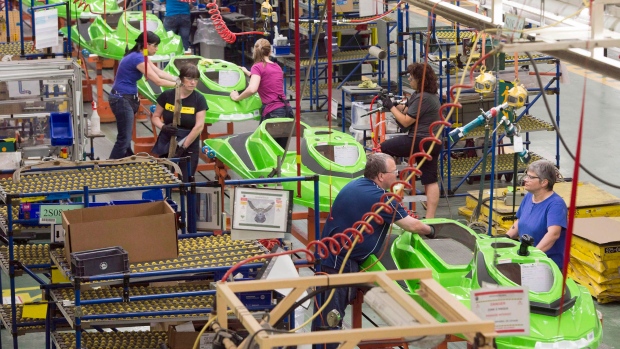
MONTREAL – The manufacturer of Ski-Doos, personal watercraft and three-wheeled Spyder vehicles is evaluating whether it wants to enter the two-wheel motorcycle business to help fuel its dynamic growth plans.

“We are in an ongoing process of assessing the market, looking at different possibilities and trends,” BRP spokesman Sylvain Morissette said after an industry analyst suggested motorcycles could be the the next growth engine for the Quebec company.

“Motorcycles could be an option as we have done in the past.”

BRP Inc. (TSX: DOO), which was derived from Bombardier Inc. (TSX: BBD.B) in 2003, sold Can-Am motocross motorcycles in the 1970s.

Morissette said BRP sees plenty of growth opportunities, but wouldn’t say how soon a decision on the motorcycles might be made or when they might enter the market.

For now, the company is focused on expanding its current products. On Wednesday, she showcased three new 2017 models at an industry event in Orlando, Florida. BRP will sell a Can-Am Maverick X3 side-by-side vehicle, a new Sea-Doo Spark TRIXX and a Can-Am Spyder F3 Limited.

The Can-Am Maverick is the third side-by-side vehicle introduced since last September. BRP has committed to expanding its product line every six months through 2020. The Valcourt, Que., Based company predicts profits will grow nine percent per year to $ 6 billion by the time. fiscal year 2021.

Desjardins Capital Markets analyst Benoit Poirier sees great promise in motorcycles. He estimates that BRP could add $ 325 to 600 million in annual revenue over time and gain three to five percent of the market share.

“This market is supported by strong fundamentals for the foreseeable future, and we believe BRP has the key elements in place to enter the segment either organically or through an acquisition,†he wrote. in a report.

Poirier said 82 percent of North American powersports dealers sell motorcycles and would be happy to add a new product. BRP has a worldwide distribution network with more than 4,200 dealers in around 100 countries.

He said BRP could leverage its engine expertise and Mexican manufacturing operations while increasing aftermarket sales.

However, Andy Galliher, general manager of Freedom Cycle in Concord, New Hampshire, said sales growth was very weak outside of off-road motorcycles.

The dealership, which sells five brands of motorcycles, says BRP would struggle to enter the market due to difficulties faced by other manufacturers.

“I think it’s a tough market to come up with a whole new product and a lot of guys have a lot of years of experience under their belt,†he said in an interview.

He doubts BRP will go ahead, but says buying from another manufacturer would be the company’s smartest move. This would allow BRP to enter the market with an established brand. Still, Galliher said BRP tends to start from scratch and leverage its engineering expertise.

taipeitimeslogo-1200x1200px_new-4

Average price of motorcycles climbs 38% to NT $ 55,000

  • By Aileen Chuang / Journalist

The average price of a motorcycle sold in Taiwan reached NT $ 55,000 per unit last year, up 38% from eight years earlier, the Ministry of Economic Affairs said yesterday.

Last year’s figure compares with an average price of less than NT $ 40,000 per unit before 2008 and NT $ 53,100 in 2014, the ministry said in a report.

Prices have increased in recent years as manufacturers added more sophisticated features to their products, such as electronic fuel injection devices, thanks to increased environmental awareness, according to the report.

With greater public attention paid to air pollution and carbon reduction issues, the government set a new standard for motorcycle emissions in 2009, forcing manufacturers to upgrade fuel injection systems to the electronic ignition.

The new regulations have increased the need for more advanced equipment and made motorcycles more expensive, according to the report.

He said the addition of large motorcycles, models of 251 cubic centimeters or more, and electric scooters to the market also helped push prices up.

Meanwhile, domestic sales of motorcycles fell from 869,000 units in 2008 to 694,000 units last year due to the completion of MRT lines and the growing popularity of YouBike services since 2009, the ministry said.

Motorcycle exports fell from 558,000 units in 2007 to 200,000 units last year due to market developments, the ministry said.

The report says the Taiwanese motorcycle market has turned to domestic sales, with the ratio of domestic sales to overseas sales increasing significantly from 57.5% in 2007 to 77.3% last year. .

IMPORTS

In addition, imported motorcycles have shown double-digit percentage growth over the years, with large motorcycles becoming increasingly popular in Taiwan, especially after regulatory approval four years ago to allow them to use. major roads, according to the report.

BOOST ‘GREEN’

Motorcycles, one of the country’s most popular forms of transportation, are expected to see increased production and prices thanks to the promotion of “green†energy and government incentive programs for consumers , the ministry said.

Comments will be moderated. Keep comments relevant to the article. Comments containing abusive and obscene language, personal attacks of any kind or promotion will be removed and the user banned. The final decision will be at the discretion of the Taipei Times.

facebook-4

Farm of 35 years of activity of Harley-Davidson motorcycles in Atascadero

A long-time reseller of Harley davidson motorcycles and clothing closed the doors of its 27,000 square foot Atascadero building in the 7900 block from Avenida San Luis Sunday after 35 years of activity.

Gary Bang Harley-Davidson Director Kristy Bang-Popowich said on Thursday that the local market is simply not big enough to support the business.

At its peak, Bang-Popowich said, the store sold around 125 motorcycles a year, but sales had fallen to around 50 in recent years. She said Harley-Davidson has slowly increased the number of outlets authorized to sell its motorcycles and cost the store much of its business outside the county. Harley-Davidson’s push towards online sales then slashed their clothing sales, she said.

“It’s just not an area big enough for our size and we really needed to have that ground traffic,†she said.

The company, owned by Bang-Popowich’s parents Gary and Mary Bang, began as an aftermarket supplier in the San Fernando Valley and began selling the American icon exclusively in 1980.

When it closed, the company had seven employees.

Bang-Popowich said she, her co-manager and sister Lisa Bang and their parents plan to stay in the county.

This story was originally published December 31, 2015 5:09 p.m.

5580a64850ff9-image

Enjoying the ride: the motorcycle company celebrates its 50th anniversary | Jackson County Chronicle

Cassandra Colson Reporter

The late Al Muth’s passion for motorcycles was so strong that he couldn’t understand why others didn’t feel the same.

“He just could never understand why everyone in the world didn’t have a motorcycle,†said Muth’s wife Jeri. “He just enjoyed this endless bike.”

Muth’s love for motorcycles – and especially the iconic Harley-Davidson models – is what paved the way for a successful Jackson County business that is known across the country. Al Muth Harley-Davidson marks its half century this year after operating in the city of Adams for just over 50 years.

“The people of Black River have always accepted motorcycles,†said Mark Muth, one of Al’s sons who currently runs the business with his wife, son and 15 employees. “We love it here.

“It was a lot of work, but it was also very rewarding. We have a lot of clients who are good friends – really.

Al got his first motorcycle, a Harley-Davidson, at age 17 after his father sold a cow to pay for the motorcycle, which at the time cost around $ 65. Al eventually went to work as a cycle mechanic, performed at fairs, and traveled across the country on his bicycle before returning to his parents’ farm in Adams town in 1958 with Jeri to milk the cows.

This is what the couple did exclusively until 1960, when they started a chainsaw dealership on the property and began exploring launching a local Harley-Davidson franchise in 1964.

But it wasn’t as easy as approaching the motorcycle company and getting the green light.

Harley-Davidson officials did not want a franchise in the Black River Falls area due to anticipated sales potential: Geographic analysis indicated the Muths could only sell one or two motorcycles from their farm property rural on Snow Creek Road.

“They said no to daddy. He said, ‘That’s good, but I’m going to sell motorcycles, so if it’s not Harley, it will be something else,’ â€said Mark.

Al Muth Harley-Davidson has proven the projection to be wrong. The company sold 10 motorcycles in the first year and 38 years later, in 2003, the franchise sold 199 new motorcycles – the most new cycles in operating history.

The company, which moved to its current location on Highway A in 2000, continues to thrive as it sells new and used motorcycles, Harley-Davidson merchandise, and has a very active after-sales service.

Customers come from near and far to visit the Muths’ business, Mark said.

“That’s the good thing is we’ve been here long enough that the word covers the whole country with t-shirts and different things that we’ve done for people,” he said. . “We’ve been here long enough that people know where we are in the motorcycle business – all over the country, that’s my feeling.”

Dave Holcomb, the company’s service manager, said he was drawn to working at Al Muth Harley-Davidson because of his own passion for motorcycles. He then graduated in agriculture after high school, but jumped at the opportunity to work as a mechanic in the Muth service department when he saw the opening.

He said he was fortunate to work with Al, former mechanic Neil Knudson, and play a role in the motorcycle business which continues to evolve as technology advances.

Motorcycles make people feel like part of a family, he said.

“My heart was in bikes and snowmobiles and there was an opening,†said Holcomb. “It seems (riding a motorcycle) is like joining a family.

“It’s so easy to go to a cycle rally and find good people.

The business has always been a family business, with Al operating it until his death 27 years ago. Jeri worked as an accountant over the years and Mark eventually took over the business. One of Mark’s earliest memories is riding in the sidecar of his parents’ motorcycle, and he would also love rides and races.

“(Getting into the sidecar) was fun – it was exciting,†he said. “I grew up with (motorcycles). That’s why I’m doing it. I’ve grown up with this my whole life. “

Jeri said she had fond memories of the trips she and Al had taken with the motorcycle club they helped found, and she remembers one in particular they took in Nashville that was particularly hot.

“I’m telling you, I think that year we had the very first new air-conditioned car. It was so hot there and when we got to the motel, I said to Al, we were almost toast, and I said, “You know, we have our first new air conditioned car and where is it?” He’s sitting in the garage at home, â€she laughed.

“We had a lot of fun on the bike.

Al Muth Harley-Davidson is planning a 50th anniversary celebration July 8-11 at its N6630 Highway A location with live music, a show with well-known stuntman Bubba Blackwell, a vintage bike tent and other shows from ‘horse riding. For more information visit www.almuth-harleydavidson.com or call (715) 284-4725.

Get local news delivered to your inbox!

2015-can-am-spyder-f3-s-action-motorcycle

Which motorcycle brand has the most owner satisfaction?

Most other satisfaction categories scored close across all brands, with handling being the other exception. Can-Am, with its distinctive three-wheeler, was rated as having average ride satisfaction, lower than all other brands. In our experience, Can-Am Spyders lack the natural agility associated with traditional motorcycles. That’s not a bad thing, but the driving experience is quite different. (The new Spyder F3 models aim to address some criticisms, increasing power and agility, and adding more adjustability for comfort.)

If you’re considering a big V-twin cruiser or touring bike, you’d be wise to take a Victory for a test drive. Victory not only excelled in owner satisfaction, but the company demonstrated high reliability, which puts it almost on par with major Japanese brands.

For a more diverse selection of models, Honda presents itself as a safe choice that performs well in both owner satisfaction and reliability.

Regardless of the brand, an important insight from our 11,000+ responding subscribers is that comfort matters. Be sure to focus on this factor during a test drive and, if necessary, explore handlebar and peg dial options to improve on the factory default setup. Many motorcycles, especially newer models, have extensive options for such adjustments.

Visit our motorcycle buying guide to see all of our reliability and owner satisfaction ratings.

Jeff Bartlet

Polaris Acquires Brammo Electric Motorcycle Business

Big news coming from the electric motorcycle camp today, as Polaris announced that it has acquired the electric motorcycle business from Brammo Inc. In addition, Polaris is acting as a leading investor in a Brammo recapitalization that allows the company to focus exclusively on the design, development and integration of electric vehicle powertrains.

Going forward, the two companies will leverage Polaris’ leadership position in the global powersports industry to market a variety of electric vehicles using Brammo’s lithium-ion electric transmission technology. In the meantime, this will allow Brammo to continue developing its electric vehicle powertrains. Brammo supplies these products, including the Brammo Power battery pack and Brammo Power vehicle management systems, worldwide to a wide variety of OEMs. As part of this transaction, Polaris will use the acquired assets to begin manufacturing electric motorcycles in the second half of 2015 at its plant in Spirit Lake, IA.

“We have enjoyed our involvement with Brammo Motorcycles over the past three years, and our enthusiasm for their advanced lithium-ion electric drivetrain technology has grown with their improvements in cost and performance. Polaris and Brammo share a goal of adding the most advanced, high-performance electric solutions to Polaris’ powersports product portfolio, â€said Scott Wine, President and CEO of Polaris.

The deal allows both companies to be more agile during the development cycle with a clear responsibility for selling products that exemplify Polaris’ standard for delivering world-class vehicles.

Polaris has been a strategic investor and partner of Brammo since 2011. During this time, the companies have collaborated on a number of projects in motorcycles, all-terrain vehicles and on-road.

“Today’s announcement not only reinforces Polaris’ commitment to providing lithium-ion electrical solutions to our consumers, but also the ability of this partnership to continue to innovate and develop power transmission technology of tip, â€Wine said. “We anticipate a return on these investments and believe the new alignment brings us much closer to providing world-class electrical solutions for all of our products. “

Considering Polaris’ stake in Victory and Indian Motorcycles, the experience, resources and capital that Polaris brings to the table can only be seen as positive in the e-bike landscape.

While we don’t know about Polaris’ long term plans with Brammo, a more immediate prediction is of Polaris / Brammo / Victory / Indian beating rival Harley-Davidson and Project Livewire to the punch of the electric motorcycle. Either way, Polaris is clearly positioning itself to become a major player in the e-bike / alternative energy game.

Klock Werks Kustom Cycles Saw Revenue Increase 650%

Laura and Brian Klock at Bonneville Salt Flats, Utah.

Crosswinds of 50 to 60 miles per hour can appear out of nowhere, even on a sunny day, and this is especially dangerous when trying to overtake a much larger vehicle, such as a semi-truck.

“A motorcycle has an elevator,†said Brian. “And the faster you go, the more it lifts, which creates a dangerous wobble.”

Klock Werks Kustom Cycles set out to resolve this issue.

Brian Klock started Klock Werks in 1997 as a one-car garage in the city of about 15,000 people. He offered motorcycle customization, which was a natural consequence of what he had been doing for years. In 2004, he and his wife Laura also began to design and sell their own pieces.

“It was a lot of buddy trading and sweat equity,†he said. “I was driving from Chicago to California to test an exhaust or other part; a magazine editor got wind of it, took a picture of the bike and put it on the cover. It has helped publicize our name. ”

Related: Hot Business to Start Now

Klock said he made a profit during those years, with annual sales of around $ 350,000, much of which was spent on developing new parts.

But it wasn’t until he created the Flare Windshield that the business really exploded.

Klock had the idea for a custom shield when he and his family were driving home from the Bonneville Motorcycle Speed ​​Trials in 2006. Laura had set records of 137 and 146 miles per hour on a Harley Davidson intended for the cruise. But even though the bike was customized for high speed, it wobbled when it hit around 125 miles per hour.

“On the way back I had my hand out the window, and it made me think, ‘How do we tilt the windshield so we can add downforce?’†Said Brian.

Upon his return to Mitchell, he began to design the prototype of a curved windshield, which would essentially act as a spoiler and prevent heaving.

“There had been a lot of crashes on those bikes at 80 or 90 miles per hour,†he said. “It was dangerous and the bike was basically floating.”

Related: Renaissance of America’s Dead Factories

With the materials they had in store, Klock designed the Flare Windshield, a curved polycarbonate shield that makes the front of the bike more aerodynamic and much more stable.

In December 2007, Klock introduced it to its biggest distributor, who thought they could sell 500 a year.

“I went in front of their fifty national sales reps and said ‘I’m going to sell 20,000,’” Klock said. “I had a year to prove it.

Six years later, the Flare Windshield – which sells for between $ 179 and $ 199 – is the best-selling part for Klock Werks, accounting for around 80% of the company’s revenue.

“We sold 18,500 in the first year,†Klock said. “We’ve caught the attention of every powersports magazine. And we’ve sold about 20,000 every year since.”

He said revenue had grown 650% since 2006. Sales have been strong even during the recent downturn: they made $ 2.5 million in sales in 2008, largely because of the Flare.

Related: The Craft Beer Craze Is Finally Hitting The South

What started out as a store with seven employees selling eight pieces now has 17 employees and 485 pieces. The boutique – and the Flare – has always been a family affair.

“This windshield is my baby,†said Laura Klock, who is in charge of marketing for the company. “And our philosophy is that people buy from people. That’s why we have a ‘try it before you buy’ guarantee.”

The Klocks and their daughters Erika, 23, and Karlee, 20, who also hold land speed records, regularly go to motorbike shows and races where they sell directly to customers, helping to install windshields. broken.

The Flare is made in Minnesota, and all of Klock Werks’ products except one are made in America. Klock emphasized how important it is for him to keep it that way.

“Everyone told me I couldn’t do it since Mitchell, SD,†Klock said. “Even though I distribute worldwide, I feel like it’s a moral obligation for me to do it at home and try to make someone else’s dream come true.”

CNNMoney (New York) First published on May 22, 2014: 7:03 AM ET